

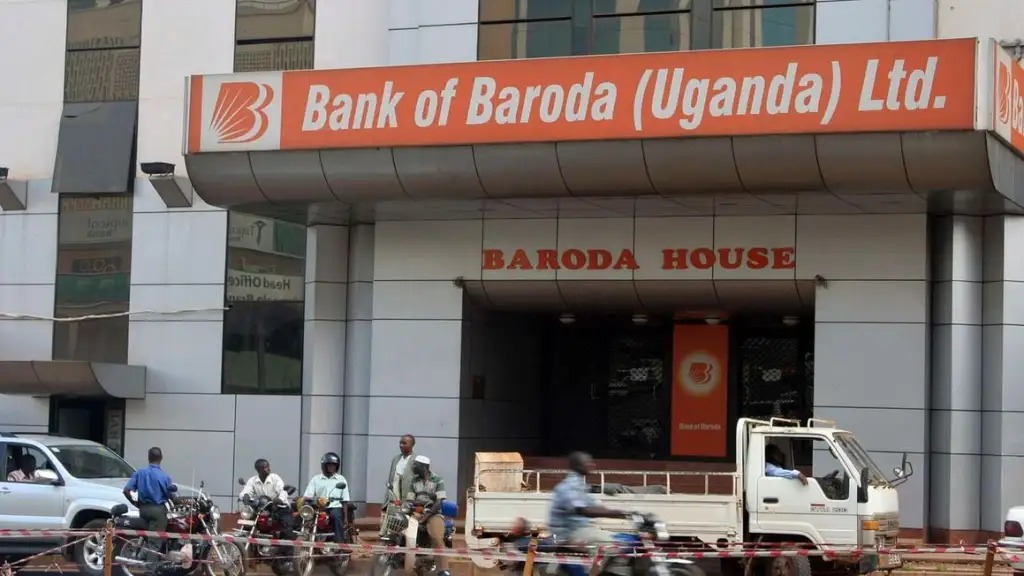
Bank of Baroda Uganda Limited has reported an improved financial performance for the year ended December 31, 2025, driven by stronger profitability, enhanced asset quality, and disciplined cost management.
According to the bank’s audited financial statements, Return on Assets (ROA) rose to 4.72 percent in FY2025, up from 4.45 percent in the previous year, reflecting improved efficiency in utilising its asset base. Return on Net Worth (RONW) also increased to 18.16 percent from 17.31 percent, indicating stronger value creation for shareholders despite a competitive operating environment.
Operational efficiency improved during the period, with the cost-to-income ratio declining to 20.08 percent from 21.22 percent. The bank attributed this to effective cost containment measures implemented alongside continued investments in digital infrastructure and branch optimisation.
Net Interest Margin (NIM) strengthened to 8.03 percent from 7.56 percent, supported by better pricing of interest-earning assets and a reduction in the cost of deposits to 5.40 percent from 5.65 percent. However, yield on advances eased slightly to 12.25 percent from 12.64 percent, reflecting a cautious lending approach amid evolving market conditions.
Asset quality recorded significant improvement, with non-performing loans (NPLs) declining to 0.30 percent from 0.55 percent. In absolute terms, NPLs reduced from 8,103 to 4,937, underscoring strengthened credit risk management and loan recovery efforts.
The bank maintained a robust capital position, with its Tier I capital adequacy ratio rising to 31.96 percent from 30.22 percent, while total capital adequacy stood at 33.13 percent, up from 31.38 percent. These levels remain well above the regulatory thresholds set by Bank of Uganda, providing a strong buffer to support future growth.
On the balance sheet, total loans and advances stood at approximately Shs1.65 trillion, with lending largely aligned to Uganda’s priority economic sectors. Agro-industrialisation accounted for the largest share at Shs839.9 billion (50.86 percent), followed by mineral-based industrialisation at Shs274.8 billion (16.64 percent) and tourism development at Shs170.7 billion (10.34 percent). Science, technology, and innovation contributed Shs9.1 billion, representing 0.55 percent of the loan book.
The bank said its sectoral focus aligns with the government’s Ten-Fold Growth Strategy, which aims to expand Uganda’s economy significantly by 2040, with increased financing directed toward industrialisation and value addition.
Liquidity levels remained stable, with the credit-to-deposit ratio moderating to 65.51 percent from 67.01 percent, signalling a cautious stance while preserving capacity for further lending. Management noted that liquidity buffers remain strong and compliant with regulatory requirements.
Beyond financial performance, the bank invested Shs122.07 million in corporate social responsibility initiatives during the year, supporting healthcare, education, environmental conservation, and community development. Key interventions included funding heart surgeries for children, medical outreach programmes, and tree-planting initiatives.
Environmental, Social, and Governance (ESG) principles continue to guide the bank’s operations, with increased focus on green financing, including renewable energy and sustainable agriculture. ESG screening has also been integrated into lending processes in line with global responsible banking standards.
Looking ahead, the bank projects continued growth in FY2026, targeting a 15.23 percent increase in deposits and a 15.08 percent expansion in gross loans and advances. Net profit is projected to reach Shs168 billion.
Strategic priorities include scaling up digital banking platforms, strengthening cybersecurity systems, expanding agent banking to deepen financial inclusion, and increasing lending to key sectors such as agriculture, manufacturing, and tourism.
